Rice Whitener: How Rice Whitening Works
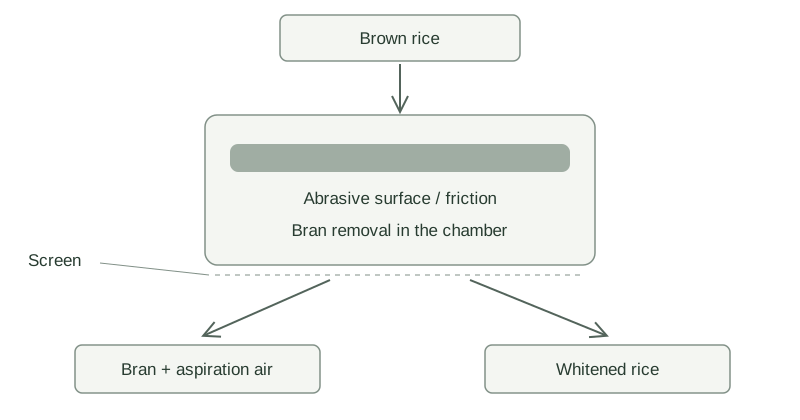
A rice whitener removes part or most of the bran layer from brown rice after husking. Depending on the machine design, bran removal is achieved mainly through abrasive action, friction between grains, or a combination of both.
On this page
What Happens Before Whitening?
Paddy should normally be husked first.
The husker removes the outer hull and produces brown rice.
Unhusked paddy should ideally be separated before the brown rice enters the whitening stage.
Abrasive Whitening
Abrasive whiteners remove bran mainly through contact between the grain and an abrasive surface.
The method can provide controlled bran removal and is commonly used as part of multi-stage milling systems.
Friction Whitening
Friction whitening relies more heavily on pressure and grain-to-grain friction inside the milling chamber.
The resulting rubbing action removes remaining bran layers.
The exact balance of abrasion, friction, airflow and pressure depends on machine design.
Why Multi-stage Whitening Is Used
Trying to achieve the entire whitening requirement in one aggressive operation can increase mechanical stress and grain temperature.
Using multiple stages allows operators to distribute bran removal across machines or passes.
This may provide better control over:
- milling degree
- grain temperature
- broken rice
- final appearance
Important Operating Factors
Feed rate
Too much or too little feed can change milling conditions.
Pressure
Higher pressure may increase bran removal but excessive pressure can increase grain stress.
Screen condition
A clogged or damaged screen can interfere with bran removal and airflow.
Airflow
Airflow assists bran removal and, depending on machine design, can help manage temperature.
Paddy condition
The moisture and physical condition of the incoming grain strongly affect milling results.
Common Rice Whitener Problems
Poor whitening
Possible causes include:
- insufficient pressure
- excessive feed
- worn milling components
- unsuitable settings
Over-milling
Possible causes include:
- excessive pressure
- too many passes
- overly aggressive settings
Bran remaining in finished rice
Possible causes include:
- clogged whitener screen
- inadequate blower operation
- inappropriate milling settings
High broken rice
Possible causes include:
- low grain moisture
- existing kernel cracks
- excessive pressure
- excessive milling severity
Sources & Technical References
References support general principles. Machine-specific settings require the matching manufacturer manual.
- Commercial rice milling systems ↗IRRI Rice Knowledge Bank · Process-stage definitions and line arrangement.